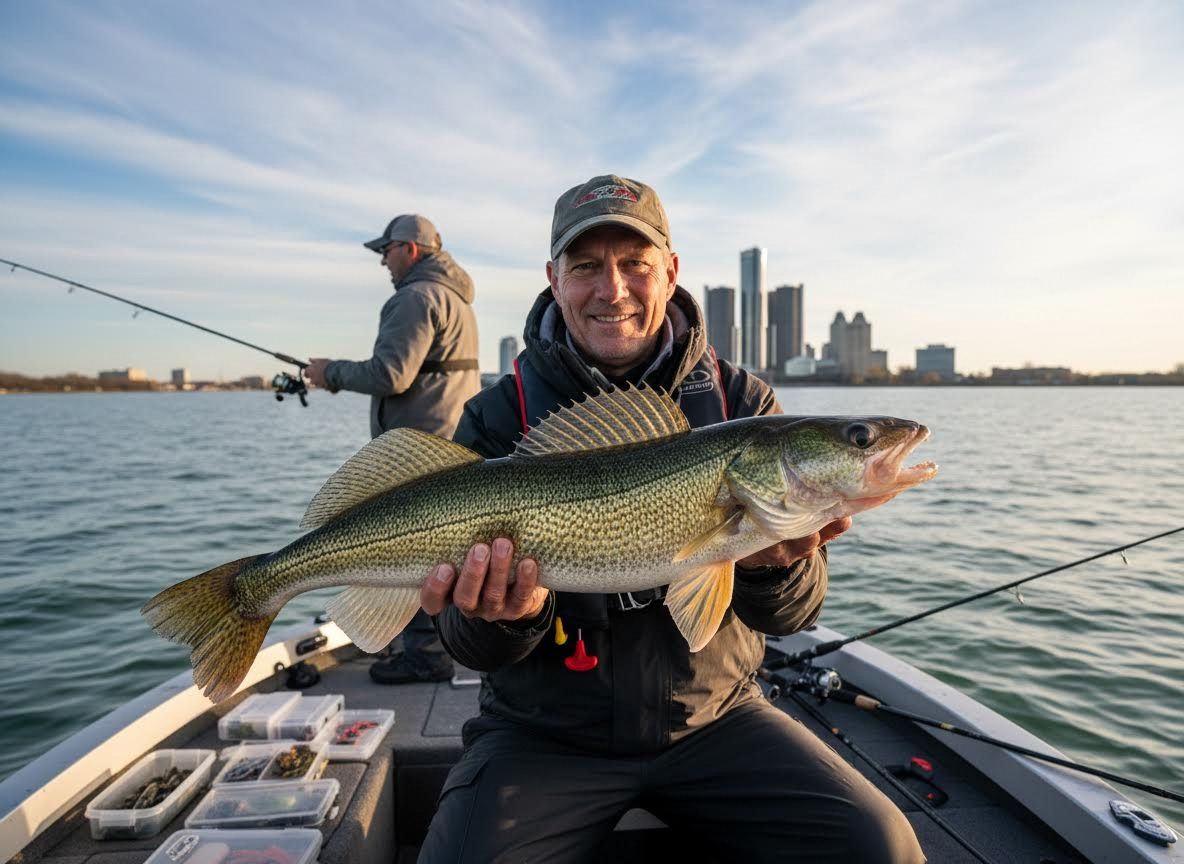
The Detroit River is a world-class walleye destination, offering anglers incredible opportunities, especially during the spring and fall runs. Mastering effective jigging strategies on these dynamic waters can significantly increase your success, transforming a good day into an unforgettable one. At About Time Charters, we've spent countless hours on the river, honing the techniques that consistently put walleye in the boat. Let's explore some proven methods to help you land more of these prized fish.
Understanding Detroit River Walleye Behavior
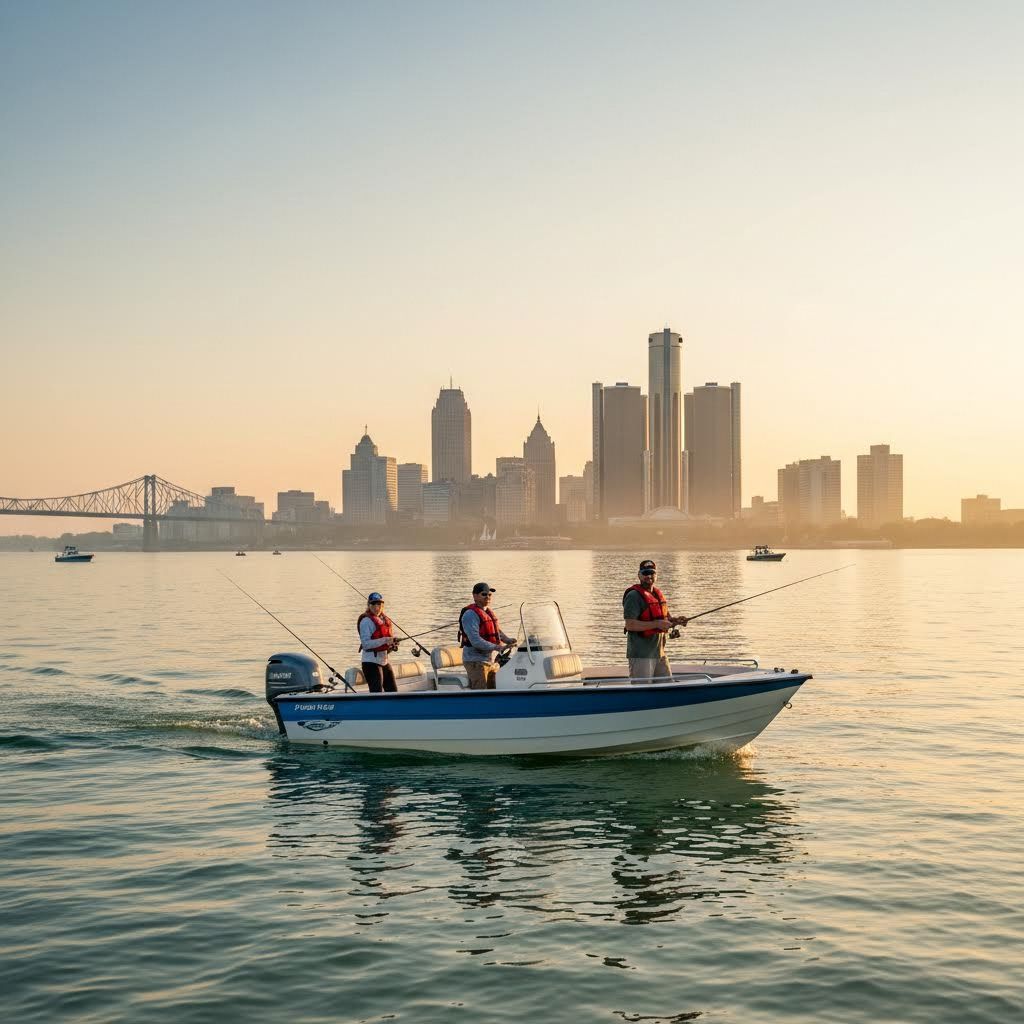
To effectively jig for walleye in the Detroit River, it's crucial to understand their habits. Walleye are highly influenced by current, depth, and forage availability. During their spawning runs, they migrate upstream, often holding in deeper channels or along current breaks. Post-spawn, they disperse but still relate to structure and current, seeking out baitfish. Pay close attention to water temperature and flow; colder water often means walleye are tighter to the bottom, while warmer conditions might see them more active in varied depths. Identifying these patterns helps you predict where walleye will be holding and how they might react to your presentation.
Essential Jigging Gear and Techniques
Successful jigging starts with the right equipment. A medium-heavy to heavy power spinning or baitcasting rod, typically 6'6" to 7' long, paired with a reel spooled with 10-20 lb braided line and a fluorocarbon leader, provides the sensitivity and power needed. For jigs, lead-head jigs weighing from 1/2 to 1 ounce are standard, often tipped with live minnows (shiners are a favorite) or soft plastic baits like grub tails or paddle tails. The primary technique is vertical jigging: position your boat directly over the fish or structure, drop your jig straight down, and work it with short, sharp lifts and drops, allowing it to flutter and fall. The goal is to keep your bait near the bottom, where walleye are often hugging the structure or navigating the current.
Reading the River and Fine-Tuning Your Approach
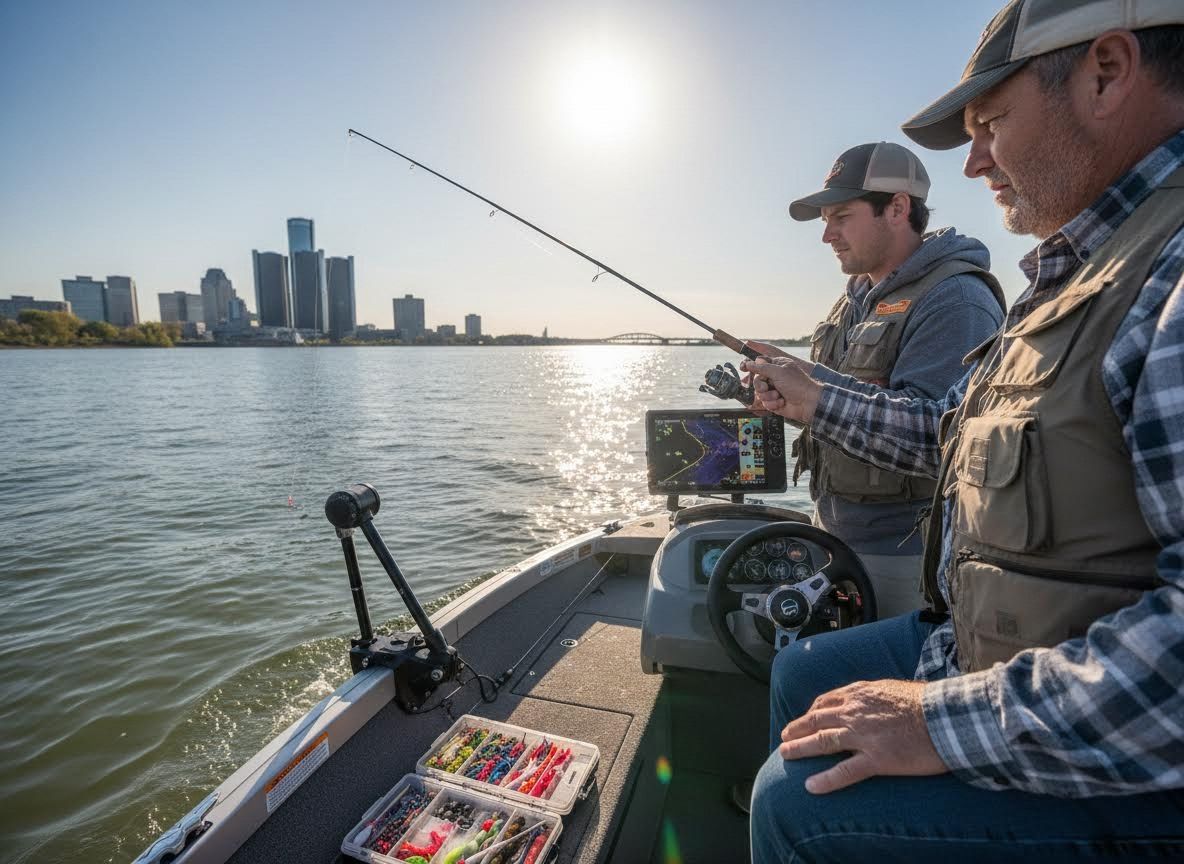
The Detroit River is constantly changing, so adaptability is key. Use your electronics to locate drop-offs, humps, and schools of baitfish, which often indicate the presence of walleye. Pay attention to current seams – areas where fast-moving water meets slower water – as walleye frequently ambush prey in these transition zones. Boat control is paramount; using your trolling motor to maintain a precise drift or hold over a specific spot allows for a vertical presentation, which is critical in strong currents. Experiment with jig weight, bait color, and retrieve speed until you find what the walleye are responding to on any given day. Sometimes a subtle tap is all you'll feel, so stay focused and be ready to set the hook.
These effective jigging strategies can transform your next trip to the Detroit River into a memorable angling experience. By understanding walleye behavior, utilizing the right gear and techniques, and constantly adapting to river conditions, you'll significantly increase your chances of success. If you're eager to learn more about advanced techniques, optimal fishing times, or simply want to experience a fantastic day on the water, consider exploring what a local Michigan fishing charter can offer. At About Time Charters, we're always happy to share our expertise and help you make the most of your time on the water.